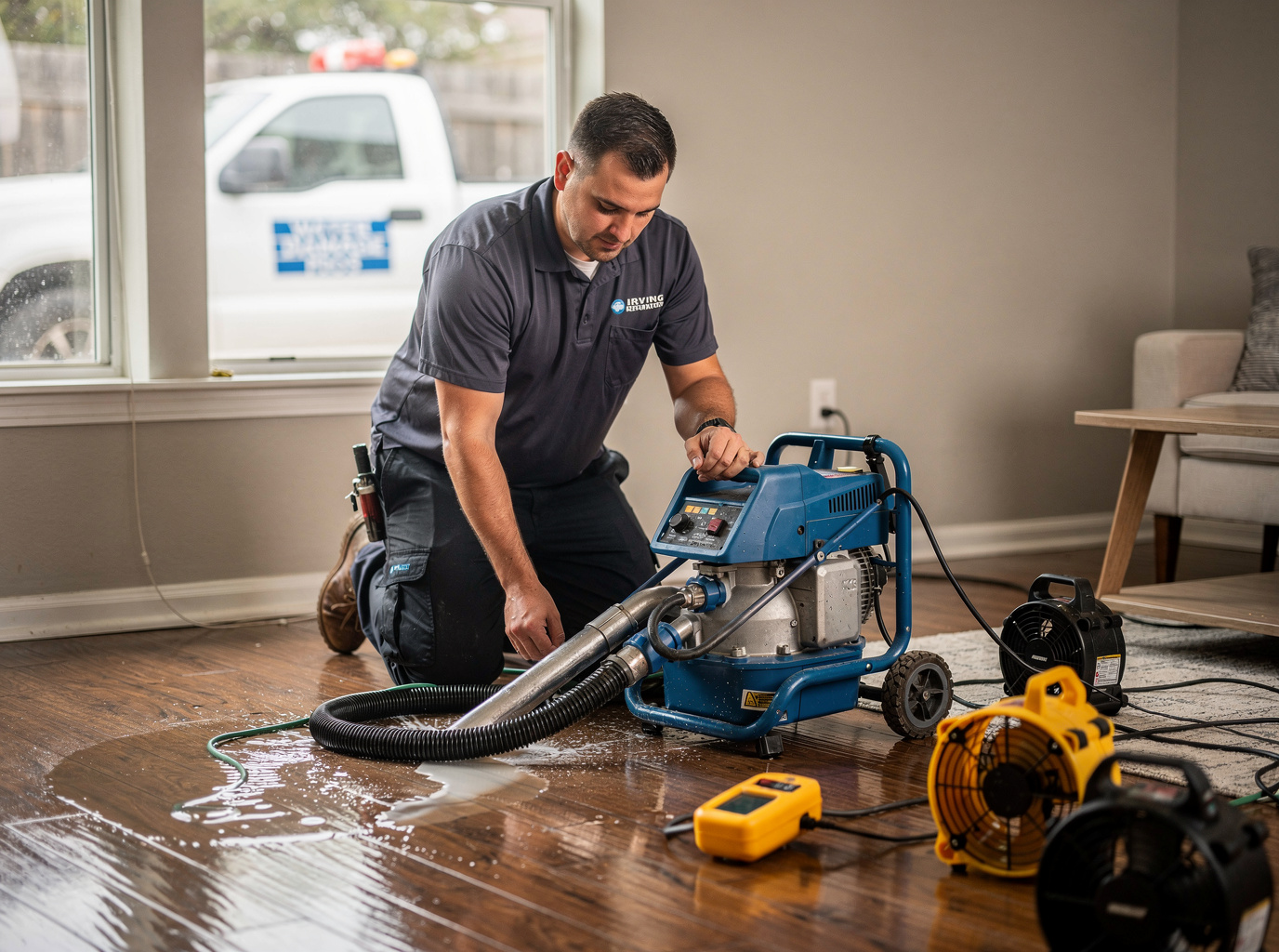
Grapevine homes around Grapevine Lake and along Dove Road face water intrusion from sudden summer downpours that overwhelm older drainage ditches. Our crew based at 1130 Luke St responds directly to these calls, extracting standing water from crawl spaces common in 1970s ranch houses before humidity turns small leaks into widespread mold.
Downtown Grapevine properties built in the 1950s and 60s often have slab foundations that trap moisture after heavy rains. We focus on drying these structures fast using equipment sized for the tight lots and narrow driveways typical along Main Street and near Nash Farm.
Access from Irving lets us reach Valley Ranch spillover streets and Carrollton border homes the same day a pipe bursts or a roof leak appears during one of the area’s frequent thunderstorms.
Around 9. Grapevine
We regularly work near:
- 📍Grapevine Lake
- 📍Historic Downtown Grapevine
- 📍Nash Farm Park
- 📍Grapevine Vintage Railroad Depot
- 📍Dove Road
Water Damage Restoration in 9. Grapevine — Local Notes
- •Lake proximity means higher groundwater that seeps into basements and garages after prolonged rain, requiring extra dehumidification steps not needed farther inland.
- •Historic district homes have narrow side yards and mature trees that limit equipment placement, so we stage drying fans through front doors and use smaller portable units.
- •Summer heat combined with high humidity accelerates mold growth on drywall within 48 hours, so we prioritize rapid removal of saturated insulation in attics common on streets near Grapevine Mills.
- •Mild winters still bring occasional freezes that crack older copper lines in 1960s construction, creating slow leaks under slabs that show up only after floors buckle.