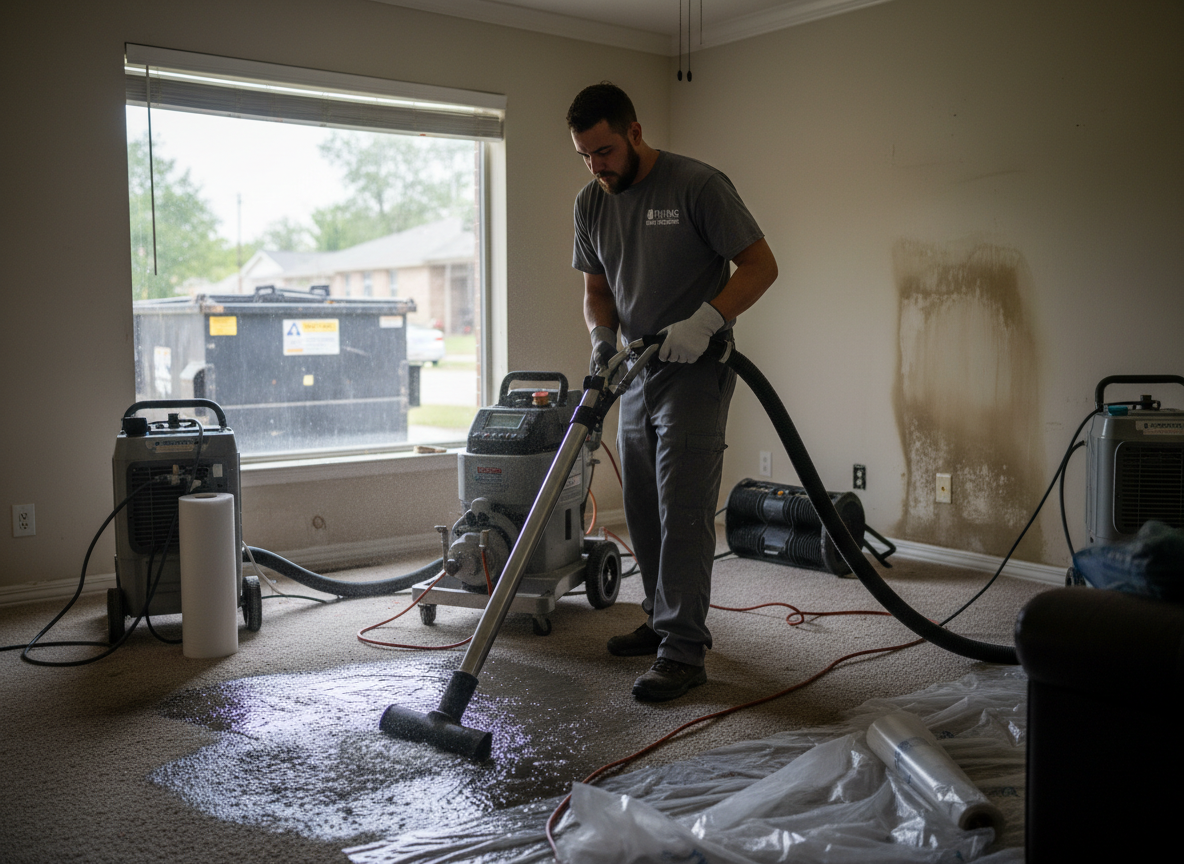
Irving’s humid subtropical climate brings hot summers and frequent humidity spikes that turn minor leaks into widespread problems fast. Homes in older Downtown Irving neighborhoods often have plaster walls and slab foundations that hide moisture longer than the newer builds in Las Colinas, so extraction must reach behind surfaces before mold sets in. Technicians watch for water migrating toward Toyota Stadium or the Irving Convention Center low spots where drainage is poor.
Valley Ranch properties sit on flatter terrain near the Elm Fork, so heavy rains push water into crawl spaces and garages more often than in Carrollton or Grand Prairie. Crews use moisture meters on both carpeted floors and engineered hardwood common in these subdivisions, because trapped water under these materials warps quickly in the region’s mild winters when windows stay closed. Proper drying prevents secondary damage that insurance adjusters flag during claims.
Dallas County code requires permits for any structural drying that affects load-bearing walls, so crews document every step when working near the Mustangs of Las Colinas commercial corridor. Skipping negative-air containment in these mixed-use buildings lets spores travel through shared HVAC, turning a single-unit job into a multi-tenant problem.
Technician insight
In Irving the thing that catches most people out with water damage repair is how fast humidity turns a small slab leak into mold under carpet in Valley Ranch homes built on flat lots near the flood plain; older Downtown Irving houses with plaster hide moisture behind walls longer than people expect, so skipping daily meter checks usually doubles the job size.
Valley Ranch Garage Slab Leak
Heavy rain pushed water under a Valley Ranch garage slab and into the laundry room. Meters showed moisture traveling under engineered hardwood toward the kitchen. Extraction and four days of targeted drying kept the floor intact and stopped mold before it started.
Water Damage Repair Services We Offer
✓Emergency Water Extraction
Removes standing water from slabs, carpets, and basements in Las Colinas and Valley Ranch homes before it reaches subfloors.
✓Structural Drying and Dehumidification
Uses industrial air movers and dehumidifiers sized for Irving’s humidity levels to dry wall cavities and hardwood in Downtown Irving properties.
✓Ceiling Leak Repair
Cuts out and replaces water-damaged drywall and insulation above kitchens and bathrooms common in older Valley Ranch townhomes.
✓Mold-Preventive Drying
Applies antimicrobial treatment and targeted drying to stop rapid mold growth triggered by the area’s humid subtropical summers.
✓Garage and Slab Water Removal
Extracts water from attached garages and slab edges in Las Colinas homes where poor grading lets runoff pool against foundations.
Water Damage Repair Cost in Irving, TX
| Service | Typical Range | What Affects It |
|---|---|---|
| Initial Assessment And Extraction | $250–$650 | Higher when water reaches multiple rooms or requires crawl-space entry |
| Full Structural Drying | $800–$2,200 | Varies with home age and whether plaster or drywall is present |
| Ceiling Or Wall Restoration | $400–$1,100 | Includes new drywall, tape, and texture in older Downtown Irving homes |
| Mold-Preventive Treatment Add-On | $150–$350 | Applied during drying in humid summer months |
Ranges are typical for Irving, TX and confirmed with an exact written quote before any work starts.
How it works
- 1
On-Site Assessment
Technician maps moisture with meters across affected rooms, noting materials and migration paths typical in Irving’s varied housing stock.
- 2
Water Extraction
Removes standing water using truck-mounted pumps and portable extractors sized for local slab and crawl-space layouts.
- 3
Drying And Monitoring
Sets up drying equipment and checks moisture daily until readings match pre-loss levels for Dallas County humidity.
- 4
Restoration And Repairs
Replaces damaged drywall, flooring, and trim then coordinates with local trades for any needed permits.
Pricing
Costs depend on square footage affected, materials involved, and how quickly drying begins.