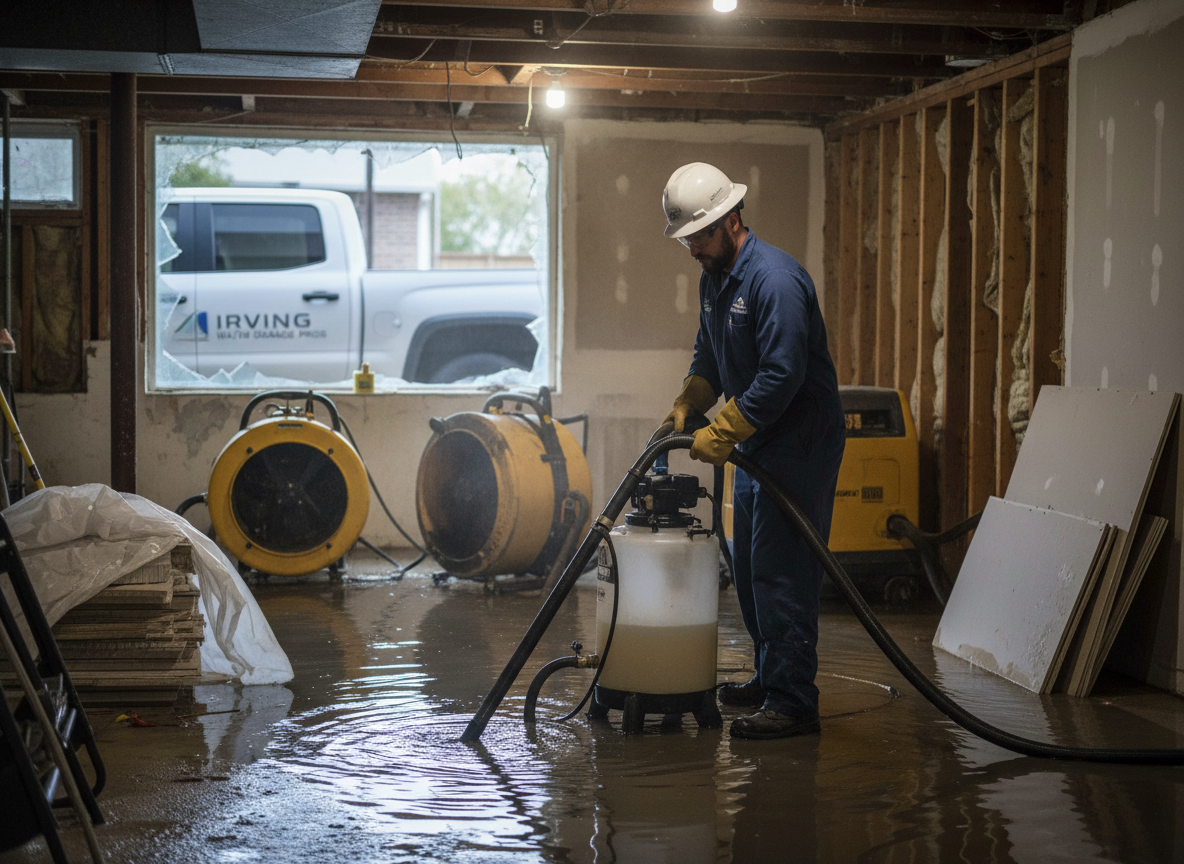
Irving sits in a humid subtropical climate where sudden summer thunderstorms and occasional winter freezes send water into older single-family homes built before 1980 in Downtown Irving and Valley Ranch. These properties often have slab foundations and cast-iron plumbing that cracks under pressure, allowing water to migrate under flooring and into wall cavities faster than in newer Las Colinas builds. Technicians must pull baseboards early and use moisture meters on both sides of interior walls because trapped humidity here routinely exceeds 60 percent and feeds hidden mold within 48 hours.
Toyota Stadium events and heavy traffic along Highway 114 can delay response times, so crews stage equipment at the 1130 Luke St shop for quicker deployment to Grand Prairie and Carrollton borders. Extraction focuses first on removing standing water from carpet pads and hardwood because local soil is clay-heavy and holds moisture against foundations for days after rain stops. Dehumidifiers run longer in these conditions than in drier North Texas counties to reach the 45 percent target before reconstruction begins.
Code requirements in Dallas County call for permits on any structural drying that affects load-bearing walls, and inspectors check for proper ventilation in finished basements common in Valley Ranch. Skipping this step risks failed final inspections and insurance denials. Crews document every reading with photos and meter logs so homeowners can show carriers exactly where water traveled from roof leaks near the Mustangs of Las Colinas sculptures or from overflowing gutters during spring storms.
Technician insight
In Irving the thing that catches most people out with Emergency Water Damage Restoration is how quickly moisture travels under the slab in older Downtown Irving homes after a freeze; the clay soil holds water against the foundation so you have to pull baseboards and check the opposite side of every wall or mold shows up two weeks later even though the floor feels dry.
Valley Ranch Pipe Burst
A supply line under a 1978 Valley Ranch slab burst during a January freeze. Water traveled under the living room and into the hallway drywall before the homeowner noticed. Crews extracted standing water, cut out saturated baseboards, and ran drying equipment for four days until meter readings stabilized below target. The home passed final inspection without mold growth.
Emergency Water Damage Restoration Services We Offer
✓Burst Pipe Water Extraction
Locate and stop active leaks then remove standing water from slabs and crawl spaces common in pre-1990 Irving homes before humidity drives secondary damage.
✓Storm Flood Cleanup
Pump out rainwater that enters through windows or doors during Dallas County thunderstorms and dry affected drywall in Valley Ranch and Las Colinas neighborhoods.
✓Sewage Backup Remediation
Safely extract contaminated water from older sewer lines that back up after heavy rain and disinfect affected areas to meet local health standards.
✓Roof Leak Drying
Contain ceiling leaks from aging composition roofs and force-dry attic insulation before moisture reaches living spaces in Downtown Irving properties.
✓Structural Drying Services
Deploy industrial air movers and dehumidifiers on slab foundations and wall cavities until moisture readings drop below 15 percent across the property.
✓Carpet and Flooring Restoration
Remove and dispose of saturated padding then clean and reinstall hardwood or laminate that survived the initial water event in humid conditions.
Emergency Water Damage Restoration Cost in Irving, TX
| Service | Typical Range | What Affects It |
|---|---|---|
| Initial Assessment And Extraction | $250–$650 | Higher when sewage or large volumes require biohazard protocols. |
| Equipment Drying (per day) | $150–$350 | Runs longer after summer storms when outdoor humidity stays elevated. |
| Carpet Pad Removal And Disposal | $200–$500 | Varies by room count and whether hardwood underneath needs separate drying. |
| Full Structural Dry For 1,500 Sq Ft Home | $1,200–$2,800 | Includes monitoring until readings meet Dallas County standards. |
Ranges are typical for Irving, TX and confirmed with an exact written quote before any work starts.
How it works
- 1
Arrival And Safety
Technician arrives within two hours, shuts off water source if possible, and sets up containment to protect unaffected rooms in the Irving home.
- 2
Water Removal
Pumps and wet vacuums extract standing water from floors and cavities while documenting moisture levels room by room.
- 3
Drying And Monitoring
Air movers and dehumidifiers run continuously with daily meter checks until readings reach target levels for the local climate.
- 4
Sanitizing And Final Walkthrough
Apply antimicrobial where needed, remove containment, and walk the homeowner through dried areas before any rebuild work begins.
Pricing
Costs depend on water volume, affected square footage, and how quickly drying reaches safe levels in Irving's humid air.