2026-11-12 · Carlos Mendoza
Water Damage From Spring Rains in Irving: First Steps
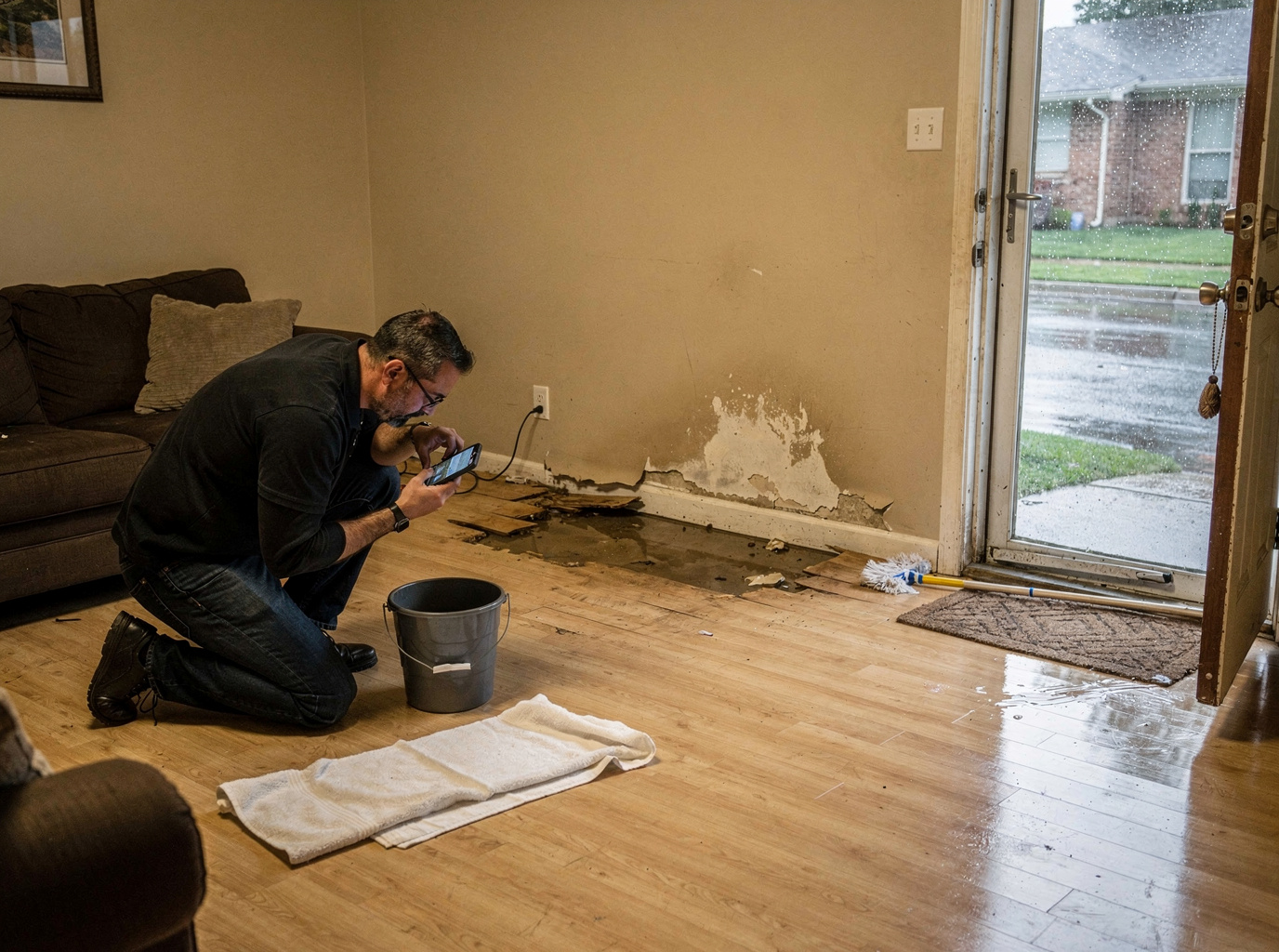
After spring rains hit Irving, the immediate first step is to cut power to affected circuits if water reaches outlets or appliances, then move valuables out of standing water while avoiding direct contact with potentially contaminated floodwater from streets in Dallas County.
Assess Safety Before Entering
Irving homes built in the 1970s and 1980s around Valley Ranch and Las Colinas often sit on concrete slabs that channel spring rainwater under baseboards when gutters overflow. Check for electrical hazards first because the area's mild winters followed by sudden downpours leave wiring vulnerable to shorts. Wear rubber boots and gloves when inspecting, and never enter rooms where water depth exceeds a few inches near outlets. Document visible moisture lines on drywall with photos before any cleanup begins. These steps prevent shocks that occur more frequently during the March-to-May rain pattern than in drier months.
Stop Ongoing Intrusion
Locate the entry point created by heavy spring rains, such as failed flashing around chimneys common in Downtown Irving properties or clogged drains near Toyota Stadium. Temporarily cover roof leaks with tarps if safe to do so, and redirect exterior water away from foundations using sandbags or plastic sheeting. In Grand Prairie and Carrollton border homes, poor grading from older lots allows water to pool against slabs for days after a storm. Avoid attempting full repairs yourself; instead note the source so technicians can address it during Water Damage Repair. Quick exterior containment reduces the volume that soaks into carpet pads and subfloors.
Document Damage for Claims
Photograph every affected room, including baseboards in Las Colinas condos and ceiling stains near the Irving Convention Center, before removing any items. Note the date and time of the rain event along with weather reports from Dallas County. Keep a written list of displaced furniture and personal belongings. This record supports insurance adjusters who routinely visit properties in the area after spring storms. Store copies of images off-site or in cloud storage in case phones get wet during later cleanup.
Remove Standing Water Promptly
Use a wet vac or buckets to extract pooled water within the first 24 hours, focusing on carpeted areas in Valley Ranch ranch-style homes where padding holds moisture longest. Open windows on dry days to promote airflow, but close them during humid periods to avoid drawing in more moisture. The subtropical climate keeps relative humidity above 60 percent most spring afternoons, slowing natural drying. Avoid using household fans near electrical outlets that may still be damp. These actions buy time until professional equipment arrives.
Professional Water Damage Restoration crews bring industrial dehumidifiers sized for whole-house drying that homeowners cannot rent locally. For detailed pricing variables that affect Irving jobs, review the Cost Factors for Water Damage Restoration in Irving article. When sewage-tinged street water enters through doors, follow guidance in How to Handle Sewage Backup in Irving Properties before any DIY contact.
Monitor for Hidden Moisture
Spring rains often push water behind drywall in 1980s-era homes near Mustangs of Las Colinas, creating hidden pockets that feed mold within 48 hours. Use a moisture meter on walls up to 18 inches above visible water lines. Check under cabinets and behind appliances in kitchens common to Carrollton-adjacent neighborhoods. If readings stay above 15 percent after two days of drying, hidden saturation remains. This inspection prevents long-term issues that surface weeks later during summer heat.